

Pediatric Eye Exam
If your child's eyes are not functioning properly, it can lead to a negative impact in their academic success, sports performance, and their confidence. Scheduling routine eye examinations will allows us to carefully monitor your child's eye health and vision through their most importance years of development.
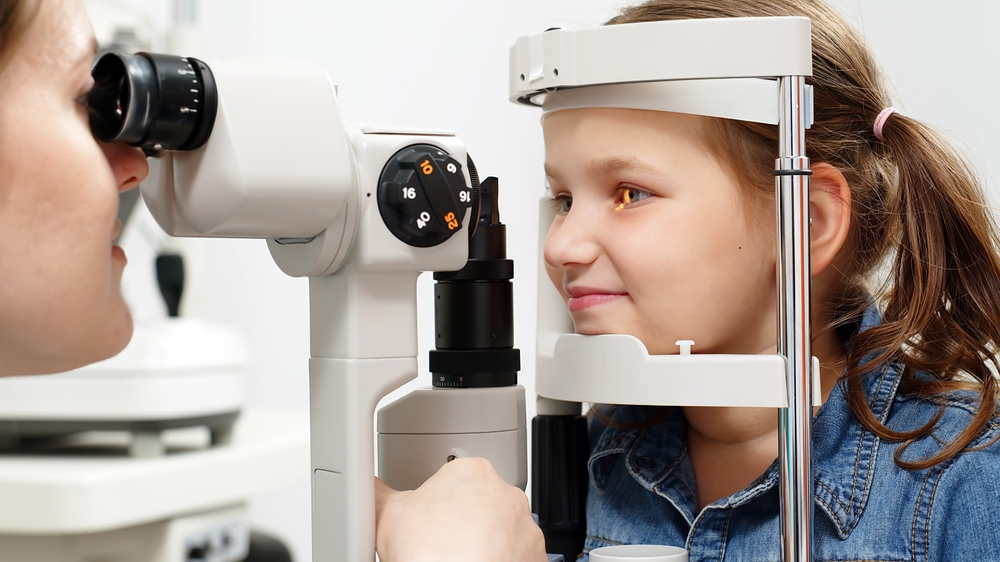
Comprehensive Pediatric Exam
components of pediatric examination
During a pediatric comprehensive eye examination, we will screen and check:
- Refractive error/ Clarity of vision
- Eye turn or "lazy eye"
- 3D vision
- Eye tracking
- Eye teaming
- Color vision
- Ocular health
Symptoms of Nearsightedness (Myopia)
- Frequent eye rubbing or blinking
- Squinting when reading the board or watching TV
- Sitting at close proximity to the TV or computer screen
- Sitting at the front of the classroom to clearly see the teacher and board
- Holding books close to the eyes
- Disinterest in playing sports that require distance vision
Symptoms of Farsightedness (Hyperopia)
- Frequent eye rubbing or blinking
- Near images or objects appear blurry, distance vision is clear
- Difficulty reading
- Headaches or fatigue after near vision activities (reading, writing, computer use)
- Eye strain
- Difficulty focusing on near objects
- Squinting
- Holding books at arm’s length
- Inward eye turn when trying to focus
Common symptoms from excessive digital device usage
- Eye strain
- Eye fatigue
- Blurry vision
- Dry Eyes
- Headaches
Let's Answer Some of Your Questions
When should my child have their first eye exam?
The first eye exam is recommended at 6-12 months of age to ensure the eyes are developing normally. The next eye exam is once between the age of 3-5 years of age. The next exam is before 1st grade and then yearly after that. Eye exams may be required more often if your child has been diagnosed with any eye conditions that needs to be monitored.
How will an eye exam be done if my child does not know their letters?
LEA symbols or figures are used to test visual acuity for young children who are unable to identify the letters on an eye chart. Your child will be asked to identify these symbols, allowing our eye doctor to measure how well your child sees both at near and distance.
Will my child's eyes be dilated?
Yes, dilating drops are necessary and essential for obtaining an accurate measure of a refractive error. With the use of special lenses, our eye doctor can then achieve the most precise prescription that is most appropriate for your child. Furthermore, dilating eye drops widen the pupil for better views of the structures inside the eye.
My child does not speak yet, how would we get an accurate prescription?
That's not a problem! Our doctor will be doing retinoscopy which is a technique used to obtain an objective measurement of your child's prescription. This test measures any refractive error such as myopia, hyperopia, or astigmatism which may be affecting your child’s vision.
Does my child need an eye exam if they already passed their vision screening?
Yes, we would still recommend a comprehensive eye exam. Children (or adults) who pass a vision screening could still have an eye health or a vision problem. Vision screening programs can't substitute for regular professional vision care since a lot of the testing done at an examination are not performed during a screening.
Can excessive screen time affect my child's eyes?
Yes, hours in front of the computer can cause uncomfortable symptoms (listed above). In addition, blue light being emitted from digital devices can affect sleep patterns and concentration levels. Furthermore, excessive computer use may also lead to macular degeneration in the long run.
How much screen time should my child have in a day?
Limiting screen time is important and we would recommend no more than 2-3 hours/day. We encourage children to spend more time outdoors - away from screens and near vision work. Studies have shown a strong link between increased outdoor play time with a REDUCED incidence of myopia.


Contact Info
Office Hours
- Monday 9:00 am - 6:00 pm
- Tuesday 9:00 am - 6:00 pm
- Wednesday 8:30 am - 5:00 pm
- Thursday 8:30 am - 5:00 pm
- Friday 8:30 am - 5:00 pm
- Saturday 8:15 am - 1:00 pm
- (2nd and 4th Saturdays in the month only)
- Sunday Closed
© 2026 Covina Hills Optometric Group. All rights Reserved. Accessibility Statement - Privacy Policy - Sitemap
Powered by:
