

Comprehensive Eye Exams
Our Comprehensive Eye Examinations are much more than just a glasses prescription. We screen for various eye conditions including cataracts, glaucoma, dry eyes, macular degeneration, ocular allergies, and many others.
Book Online
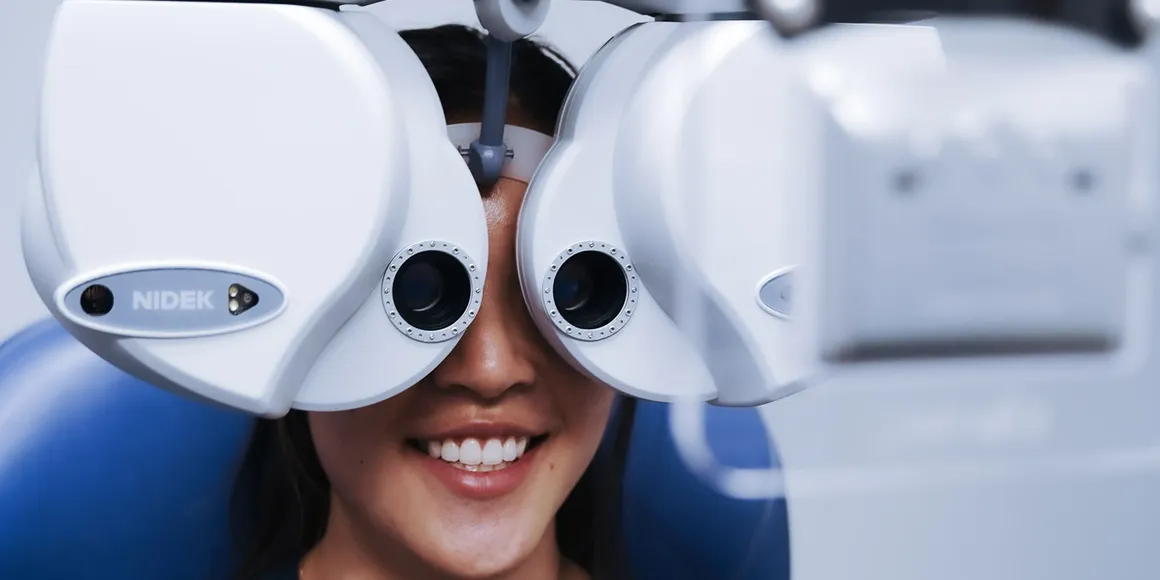
Components of a Comprehensive Exam
We are not your typical 15-min eye examination optometry office.
Why? Because seeing 20/20 goes further than a refraction (aka: "1 or 2 is better?").
It is a common misconception that an eye exam simply involves getting your glasses prescription. The truth is, in order to give you the most clear and precise prescription possible, your eye health must also be in optimum condition. A good comprehensive eye examination starts with an evaluation at the front of the eye and extends to the very back of the eye.
Pre-testing
Pre-testing is done by our well-trained optometric technicians. During this time we will take important objective measurements that will help us provide you with the most precise prescription. We will also check your color vision and depth perception (3D vision) to make sure your eyes are working well together. Finally, the technicians will also help the doctor collect data that will help screen for medical conditions like: glaucoma, diabetes, high blood pressure, cancer, and many others.
Find out moreVision Test
This part is when we check your vision and everyone is most familiar with this part of the exam. Here we do a refraction (aka: when we ask you "which is better: 1 or 2 ?") and we get the most accurate prescription for your glasses.
Find out moreBinocular Vision Testing
In order to see clearly, your eyes must focus, move, and work together as a team. Here we check your eyes' alignment, you eyes' coordination, and your eyes' focusing ability. Sometimes an additional binocular vision evaluation may be required for patients experiencing eye strain, double vision, and headaches.
Find out moreFront Surface of the Eye Evaluation
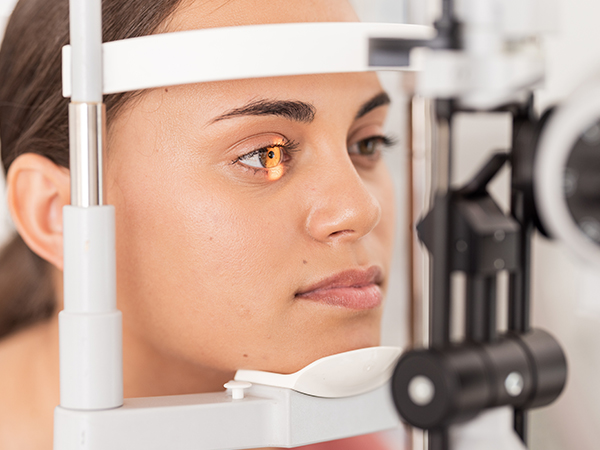
A slit lamp microscope will be used to asses the health of the front surface structures of the eyes: the eyelashes, the eyelids, the white part of the eye (conjunctiva), and the clear part of the eye (the cornea). Our eye doctor will use different colored dyes (yellow, green, and red) to rule out any front surface abnormalities. Here we look for any eye conditions and/or abnormalities that may be having an impact in your prescription and how you see.
Find out more
Back Surface of the Eye Evaluation
A slit lamp microscope, a variety of hand-held lenses, a binocular indirect ophthalmoscope, and digital technology cameras are all important components that we use to evaluate the health of the back of your eye. Here we can screen, diagnose, and manage many eye medical conditions including: diabetes, high blood pressure, macular degeneration, glaucoma, cataracts, and many others. These conditions play a big role in the integrity of your eye health and therefore impact your prescription and how well you see.
Find out moreLet's Answer Some of Your Questions
How often should I get an eye exam?
Patients that are 18-60 years of age are recommended to come for any eye exam every 2 years. However, if your doctor is managing any eye condition or disease (i.e. dry eye), exams every year are recommended with more frequent medical visits as needed and recommended. After the age of 61, eye exams are recommended on a yearly basis.
Who should get an eye exam every year?
Yearly eye exams are recommended for patients who have:
Contact lenses/ Contact lens wearers
An ocular disease
A family history of an eye disease
A systemic health condition (like diabetes, high blood pressure, or high cholesterol)
A visually demanding job (long hours on the computer)
A previous eye surgery or LASIK/PRK
A high prescription (myopia, hyperopia, or astigmatism)
Any other eye health concerns
How long does an eye exam take?
Your exam can be anywhere from 30-45 minutes depending on how many problems we are addressing. Sometimes it may be necessary to schedule additional medical visits to continue your treatment.
I have great vision and I do not need glasses,
do I still need an eye exam?
Yes, absolutely! A comprehensive eye exam is more than just a vision check. We check the overall heath of your eyes to make sure your eyes are healthy so your vision continues being great!
Do I need an eye exam if I have diabetes?
Yes, diabetes affects different part of the eyes including your eyes and your vision. When uncontrolled, diabetes can damage the small blood vessels in the back of your eye and if leakage occurs, it can lead to damage in the back of the eye. Getting annual check ups can help with early diagnosis and treatment and therefore, prevent vision loss!
What are common symptoms of digital eye strain?
Eye strain, headaches, blurred vision, dry eyes, and neck/shoulder pain.


Contact Info
Office Hours
- Monday 9:00 am - 6:00 pm
- Tuesday 9:00 am - 6:00 pm
- Wednesday 8:30 am - 5:00 pm
- Thursday 8:30 am - 5:00 pm
- Friday 8:30 am - 5:00 pm
- Saturday 8:15 am - 1:00 pm
- (2nd and 4th Saturdays in the month only)
- Sunday Closed
© 2026 Covina Hills Optometric Group. All rights Reserved. Accessibility Statement - Privacy Policy - Sitemap
Powered by:
