

Contact Lens Evaluations
No contact lens is the same and there is no such thing as "one fits all." We take a comprehensive approach with your contact lenses and care about obtaining the best fit that provides you with the best comfort, best fit, and best vision. We value the importance of educating patients on proper handle, wear, and care.
Book Online
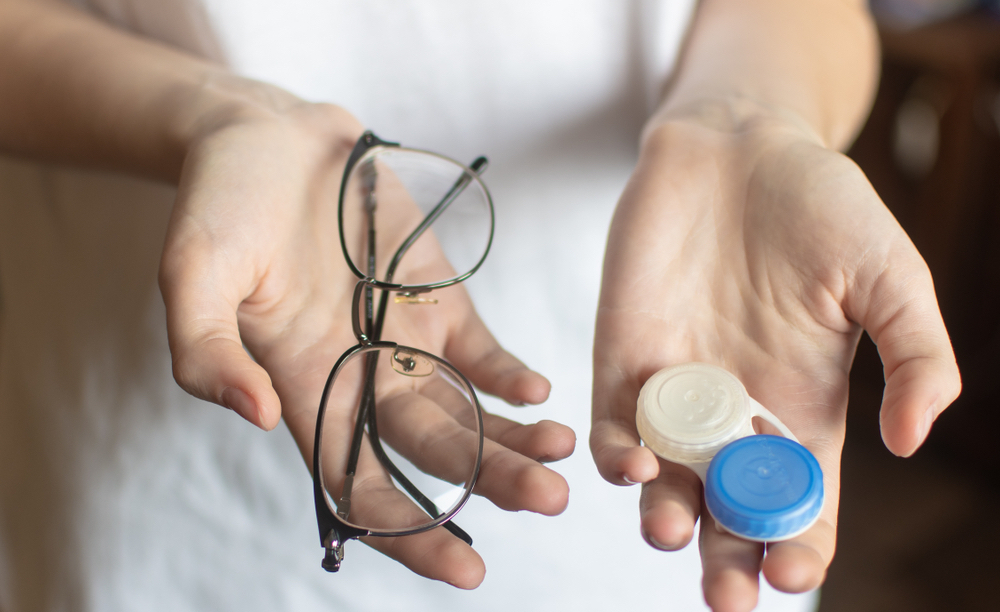
About Soft Contact Lenses
Soft contact lenses
Soft daily-wear contact lenses are very comfortable to wear and are replaced on a planned schedule: monthly, bi-weekly or daily. Soft lenses are easy to clean and available in most prescriptions including moderate astigmatism.
Types of Contact Lenses Depending on Refractive Error
Sphere (no astigmatism): allow you to see at distance and near, these lenses are able to correct moderate-high levels of myopia and hyperopia.
Astigmatism: allow you to see at distance and near, these lenses are able to correct moderate levels of astigmatism.
Multifocal: allow you to see both at distance and near, and can also correct moderate levels of astigmatism.
Soft Contact lens replacement schedule
Daily: can be worn daily and discarded after daily wear.
Bi-weekly: can be worn daily and discarded after 14 wears (2 weeks). Must be cleaned and stored in a contact lens case after each daily wear.
Monthly: can be worn daily and discarded after 30 wears (1 month). Must be cleaned and stored in a contact lens case after each daily wear.
Benefits of contact lenses
Larger field of view as frames are not blocking your vision.
No lens fogging.
Lenses move with your eyes so very convenient for sports or physical activities.
No frame/nose pad indentation from glasses.
Colored contact lenses / prosthetic colored lenses
We prescribe colored contact lenses for cosmetic and recreational purposes. Since colored lenses are mostly cosmetic, they are not available in astigmatism or multifocal designs.
Furthermore, we also prescribe contact lenses for therapeutic reasons related to iris and corneal abnormalities, eye trauma, ocular albinism, an other misshaped pupils.
Let's Answer Some of Your Questions
Why do I need a comprehensive exam with a contact lens evaluation?
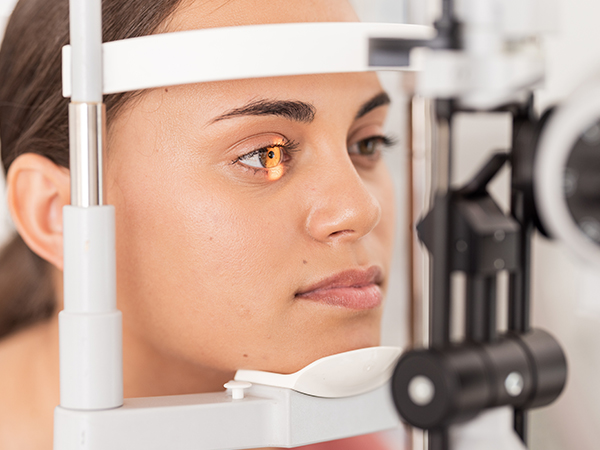
The FDA classifies contact lenses as medical devices and therefore a thorough diagnostic examination is necessary. This comprehensive eye examination will allow our eye doctors to determine your most accurate prescription and also evaluate the overall health of the front and back of your eyes. After the examination, our doctors will decide if contact lenses are safe to be prescribed to you.
Who can wear contact lenses?
Many patients are now contact lens candidates in terms of refractive error as soft contact lenses are now available in an extended range of parameters to correct: nearsightedness (myopia), farsightedness (hyperopia), and astigmatism. Good contact lens candidates are patients who are mature and responsible to maintain good contact lens habits to avoid contact lens-related infections.
I've never worn contact lenses, how do I put them in?
We know that being a first-time contact lens wearer can be intimidating, but don't worry, we got you! Our patient optometric technicians will gladly contact lens train you. Putting lenses in the eyes for the first time can be challenging and the only thing we ask of you is: patience with yourself. Once you are able to insert and remove the contact lenses on your own, you would then be able to take the lenses home to practice. The doctor will also schedule you to come back for another appointment to follow-up on your contact lens fit.
What if I can't get the lenses in my eyes after my training?
Dont worry! Sometimes we may need several days of contact lens training before we are successful with insertion and removal.. and that is totally fine! As we have said before, putting lenses in your eyes can be very challenging for some people. We are happy to help you every step of the way!
Are contact lenses safe for my eyes?
Contact lenses are very safe for healthy eyes! It is important to first do a comprehensive eye examination to make sure contact lenses are an appropriate option for you. Our doctor may want to first treat any kind of ocular disease prior to beginning a contact lens fit and evaluation .
Can I wear contact lenses if I have dry eye?
Part of the comprehensive eye exam is to do a dry eye screener. If our doctor finds that you have mild dry eye we may need to concurrently treat your dry eye and also fit you into a contact lens that will not exacerbate your dry eye. In more moderate-severe cases of dry eye and ocular surface disease, our eye doctor will recommend treating and managing the dry eye prior to beginning a contact lens evaluation and fit. After the ocular surface disease is managed, the doctor will decide if it is safe for you to proceed with contact lenses.
Can my child wear contact lenses?
A child's motivation and maturity level indicate if a child is a good candidate for contact lenses. The child needs to be responsible enough to care for the contact lenses and hygiene regimen. The optimal age to begin wearing contact lenses is usually around 10-12 years old. An older child may have a higher motivation for contact lens wear and therefore adapt more quickly.
We may begin contact lens wear in children younger than 10 years of age as we may be prescribing contact lenses for myopia control therapy. In this case, parents and/or guardians need to be more involved and help the child with insertion and removal, replacement schedule regimens, and lens care/hygiene support.


Contact Info
Office Hours
- Monday 9:00 am - 6:00 pm
- Tuesday 9:00 am - 6:00 pm
- Wednesday 8:30 am - 5:00 pm
- Thursday 8:30 am - 5:00 pm
- Friday 8:30 am - 5:00 pm
- Saturday 8:15 am - 1:00 pm
- (2nd and 4th Saturdays in the month only)
- Sunday Closed
© 2026 Covina Hills Optometric Group. All rights Reserved. Accessibility Statement - Privacy Policy - Sitemap
Powered by:
